
Home / Service Areas / Nashville
Commercial HVAC service and repair in Nashville, TN
Nashville's commercial buildings run hard. Hospital towers never shut off, office floors fill up by 8am, and the warehouses along Elm Hill Pike and Cockrill Bend move freight through July heat. We service and repair the rooftop units, chillers, boilers and air handlers that keep Davidson County buildings running, and we only work on commercial and industrial equipment.
- Davidson County
- Climate zone 4A mixed-humid
- 24/7 emergency line
What Nashville asks of a building's HVAC
A few facts about this city that show up on our service calls, each with its source.
A long, hot cooling season
Nashville averages 1,873 cooling degree days a year and 54 days at or above 90°F. July alone accounts for more than a quarter of the annual cooling load. Rooftop condensers that were marginal in May are the ones that trip in July.
NOAA 1991–2020 normals, BNA · NOAA monthly cooling normals, BNAHumidity is half the load
The average July dew point at the airport is about 68°F, and on the stickiest tenth of July hours it runs near 73°F. That is moisture your equipment has to pull out of the air, which is why short-cycling, oversized units and weak dehumidification feel so bad here.
NOAA hourly normals, BNAA health care town
More than 900 health care companies operate in Middle Tennessee, and Vanderbilt University Medical Center, HCA Healthcare and Ascension Saint Thomas are among Davidson County's largest employers. Medical buildings need planned shutdowns, tight humidity control and equipment that simply does not stop.
Nashville Area Chamber of CommerceWarehouses by the million square feet
The Elm Hill Pike and I-40 corridor holds about 33.75 million square feet of industrial space, with Allied Drive and MetroCenter/Cockrill Bend behind it. Big-box buildings mean long rows of rooftop units and makeup air units, often of mixed ages.
CBRE Nashville Industrial, Q4 2025Moderately hard water
Metro Water's 2025 calcium hardness averaged 75.3 mg/L. For a cooling tower that evaporates water all summer, that is scale waiting to happen on condenser tubes without steady water treatment and blowdown.
Metro Water Services, 2025 reportChilled water on a city scale
Downtown, Metro's District Energy System supplies chilled water and steam to 42 buildings from one plant. Buildings outside that loop, which is most of the city, depend on their own chillers, towers and rooftop units.
Metro Nashville District Energy SystemWhat we do for Nashville buildings
- Service and repair
Rooftop units on retail centers, air handlers in office towers, anything from 1 ton up, any brand.
- Maintenance agreements
Scheduled visits before the cooling season, with write-ups your property manager can file.
- Chiller service
Air-cooled and water-cooled machines for office, hospital and process cooling, up to 200 tons.
- Emergency calls
Nights and weekends through the same office number, for the server room or the tenant floor that cannot wait.
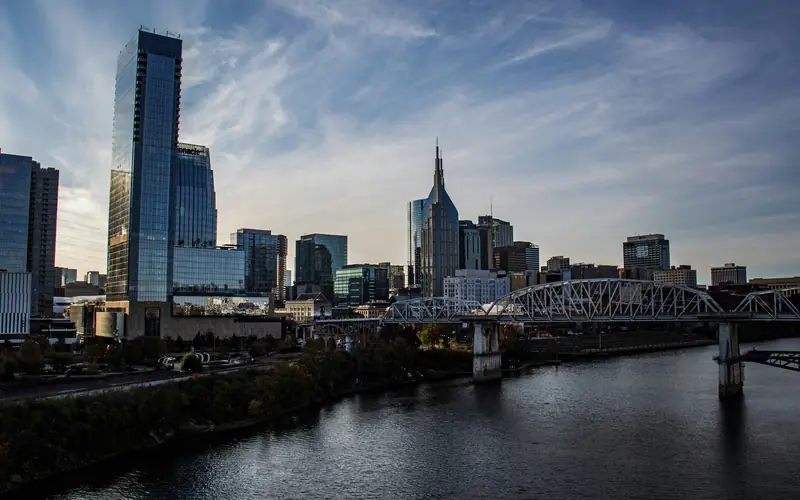
Across Davidson County
We take calls from downtown and Midtown office buildings, the medical campuses, the MetroCenter and Cockrill Bend industrial areas, the Elm Hill Pike warehouses, and the retail and light industrial buildings of Antioch, Madison and Goodlettsville. Nashville also has plenty of older buildings with older equipment, and equipment that has outlived its parts catalog is exactly where being resourceful pays.
We work on the equipment inside those buildings, such as air handlers, pumps, controls and any rooftop or backup units. The district plant itself belongs to Metro and its operator.
Yes. We schedule shutdowns, crane lifts and noisy work around your tenants, patients and business hours, and plan temporary cooling for critical rooms before anything goes offline.
No. We work only on commercial and industrial equipment.
Nearby, and next
Nashville building, equipment down?
Tell us the address, the unit and what it is doing. For anything urgent, call.
- Phone, 24/7 for emergencies(615) 814-6338
- EmailService@britemech.com