
Home / Preventive Maintenance
Commercial HVAC maintenance service and agreements
A maintenance agreement puts every rooftop unit, chiller, boiler, cooling tower and air handler in your building on a written schedule. We check the same things on every visit, write down what we found, and tell you which equipment to start budgeting for long before it quits.
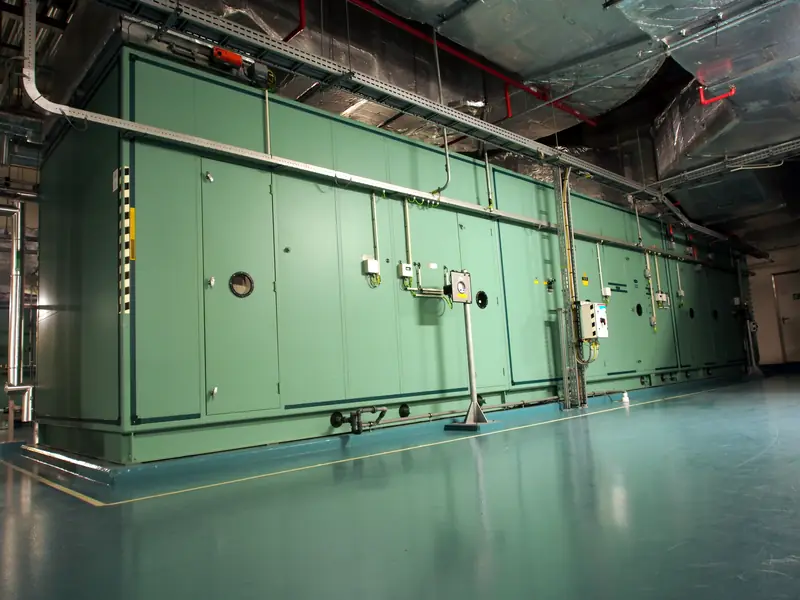
An equipment list, a calendar and a logbook
Most commercial HVAC failures announce themselves weeks ahead. A belt glazes and starts to slip, a capacitor swells, a condenser coil loads up with cottonwood and dust until head pressure creeps toward the safety limit. On a maintenance visit those are ten-minute fixes. Found at 3pm on the hottest day of the year, they are an outage.
An agreement with us starts with a list: every piece of equipment in the building, its make, model, serial number, age and location. From that list we set a visit schedule for each unit based on what it is and how hard it works. A 5-ton unit over a storage room does not need the same attention as the 60-ton unit serving your production floor, and a process chiller running three shifts gets looked at more often than a comfort chiller that sleeps from October to April.
What a visit checks, by equipment type
| Equipment | What we check on a maintenance visit |
|---|---|
| Rooftop and package units | Filters, belts and sheaves, condenser and evaporator coils, condensate pan and drain, economizer dampers and linkage, compressor amps and pressures, gas heat ignition, burners and heat exchanger. |
| Chillers | A full operating log of pressures, temperatures and amps, oil level, refrigerant leak check, starters and contactors, safeties and flow switches, and the pumps and strainers on the loop. |
| Low-pressure boilers | Burner operation and flame signal, low-water cutoff, pressure relief valve, operating and high-limit controls, flue and venting, and the circulator pumps. |
| Cooling towers | Fan motor, belts or gearbox oil, basin and strainer condition, fill and drift eliminators, float and makeup water, and water treatment readings. |
| Air handlers and makeup air | Filters, belts, bearings and fan wheels, chilled and hot water coils, control valves and actuators, dampers and freeze protection. |
When something on that list does break, the repair call works from the same records, whether it is rooftop unit repair, chiller service, boiler repair or cooling tower service. And on every visit, whatever the equipment, six things get touched.
The six checks on every visit
- Filters. Changed on a schedule matched to the building. A loaded filter starves the coil of air, and a starved coil freezes in summer and overheats a heat exchanger in winter.
- Belts. Checked for wear, tension and alignment, replaced before they break. A thrown belt on an air handler stops airflow to an entire floor.
- Coils. Condenser coils cleaned, evaporator coils inspected. Dirty condenser coils are one of the most common reasons a rooftop unit trips on high pressure in July.
- Electrical. Contactors, capacitors, terminal connections and motor amp draw. Loose lugs and pitted contacts take out motors and compressors that had years left in them.
- Refrigerant. Operating pressures and temperatures recorded and compared with the last visit. A slow drift is a leak we can find while it is still small.
- Controls. Setpoints, schedules, sensors and safeties. A unit running 24 hours on an unoccupied schedule is wasting money every night, and a safety that no longer trips is not protecting anything. On building automation systems we check what the controls think the equipment is doing against what it is actually doing.
Spring cooling startup, fall heating startup
Middle Tennessee runs the equipment hard at both ends of the year. Nashville averages 54 days a year at 90°F or hotter, according to NOAA's 1991–2020 climate normals, and the heating season still brings hard freezes. So the two biggest visits of the year are timed to the seasons.
The spring cooling startup happens before the first warm week: coils cleaned, compressors started and checked under load, cooling towers filled and started, chillers logged, condensate drains flushed before the humid months fill them. The fall heating startup happens before the first cold morning: boilers fired and their safeties tested, gas heat sections on rooftop units lit and checked, heat exchangers inspected, freeze protection on air handlers verified, and cooling towers drained or protected for winter.
Written up after every visit
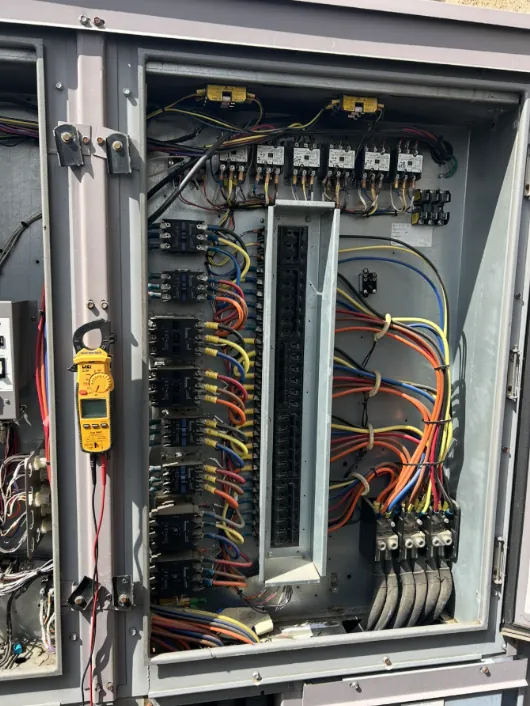
You get documentation after every visit, not just when something breaks. Each write-up lists the equipment we serviced, the readings we took, what we replaced, and anything we want to keep an eye on. Because the readings are recorded the same way each time, a compressor drawing a few more amps than last quarter or a chiller approach temperature that keeps widening shows up on paper before it shows up as a failure.
That paper trail also answers the questions a facility manager gets asked: when the filters were last changed, what the insurance inspector wants to see on the boiler, and why the budget needs a line for the unit over the east wing.
Budget notes on aging equipment
Every piece of equipment wears out eventually. ASHRAE's median service life figures put rooftop units at about 15 years, reciprocating chillers at about 20, galvanized cooling towers at about 20, steel firetube boilers at about 25 and cast iron boilers at about 35. Plenty of well-kept equipment outlives those numbers, and regular maintenance is a big part of the reason.
Our approach is service first, not replacement first: we keep equipment running as long as repairing it is the economical choice. When a unit is getting close to the end, the visit report says so, with the reasons. You get a year or two of warning to plan an equipment replacement in the budget, instead of an emergency purchase order in August.
Taking over from your current contractor
Switching maintenance contractors is simpler than most people expect. Our first visit is an inventory and baseline: we record every nameplate, note the condition of each unit, take a full set of readings, and flag anything that needs attention now. If your previous contractor left logs or service reports, we read them, since a history of repeat repairs on one unit tells us a lot. If there are no records at all, the baseline visit becomes the first page of the new ones.
Visits that fit your operating hours
A maintenance visit should never be the thing that shuts down a production line or chills a lobby full of customers. We schedule work that needs equipment off around your shifts, changeovers and business hours, and we tell your team before any unit is locked out. Plants, schools, offices, medical buildings, warehouses and churches all get the same rule: your schedule sets ours.
We maintain equipment in buildings across the Middle Tennessee counties we serve, from Nashville and Franklin to commercial buildings in Lebanon and Gallatin.
Maintenance agreement questions
At a minimum, twice a year: a cooling startup in spring and a heating startup in fall. Many buildings need more, because filters on busy rooftop units often need changing every one to three months and process equipment runs year round. We set the frequency unit by unit from the equipment list.
A written report for that visit: each unit serviced, readings taken, parts replaced, problems found and what we recommend. Over time the reports become the maintenance history for every piece of equipment in the building.
No. The first visit builds the record from scratch: nameplate data, age, condition and a baseline set of readings for each unit. Old records help if you can find them, and we do not need them to get started.
Yes, all makes and models, including older equipment from manufacturers that have merged or dropped the product line. A building with three brands of rooftop units and a chiller from a fourth is normal for us.
Where the maintenance log leads
Send us your equipment list
A rough count of rooftop units, chillers, boilers and towers is enough to start. We will walk the rest with you.
- Phone, 24/7 for emergencies(615) 814-6338
- EmailService@britemech.com