
Home / Service and Repair
Commercial HVAC service and repair in Middle Tennessee
When a rooftop unit quits on a Tuesday afternoon or a chiller trips in July, you need the fault found, not a proposal for new equipment. We handle commercial HVAC system repair on every make and model from 1 ton to 200 tons, and we keep older equipment running for as long as repairing it is the economical choice.
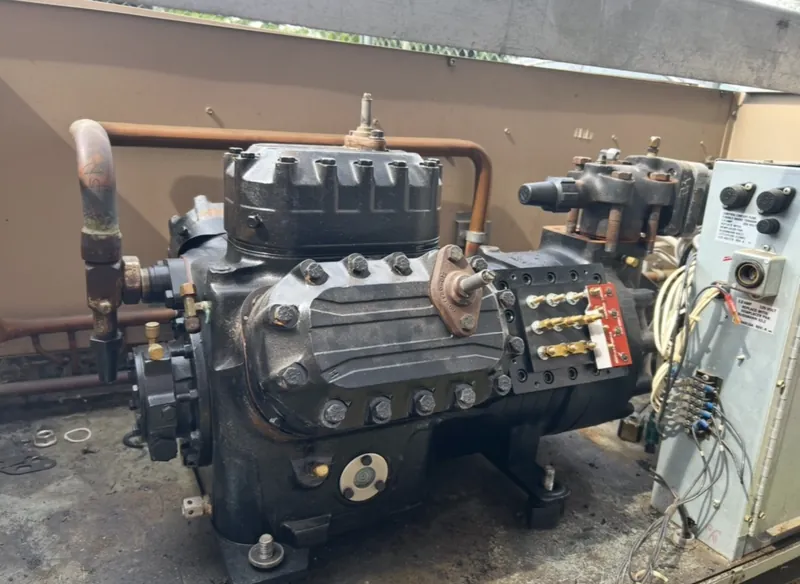
Diagnosis first, then the quote
A lot of commercial HVAC companies are built to sell equipment. Their tech walks up, sees an older unit, and the conversation turns to replacement before anyone has put a meter on it. We have followed behind companies like that many times, found the actual problem, repaired it, and had the equipment back online.
Every repair call starts the same way: the controller, the electrical side, then the refrigerant circuit or water side, in that order. We read what the controls are asking for, check what the equipment is actually doing, and show you the part that failed. Then you get a price for fixing that part.
What we check on a commercial repair call
| Symptom | Where we look first |
|---|---|
| Not cooling | Call for cooling at the controller, contactors and capacitors, condenser fan motors, compressor amp draw, suction and head pressure, a dirty or blocked condenser coil. |
| Not heating | Ignition sequence, flame sensor, gas valve, inducer and pressure switch, high limits, or on hot water systems the boiler, pump and control valve. |
| Tripping or short-cycling | High or low pressure safeties, overloaded motors, a failing compressor, low charge, loose power connections and oversized setpoint swings. |
| Noise and vibration | Belts, sheaves, bearings, fan blades, motor mounts and compressor valves. |
| Water where it should not be | Condensate pans and traps, clogged drains, frozen evaporator coils and airflow problems behind them. |
Older equipment is our specialty
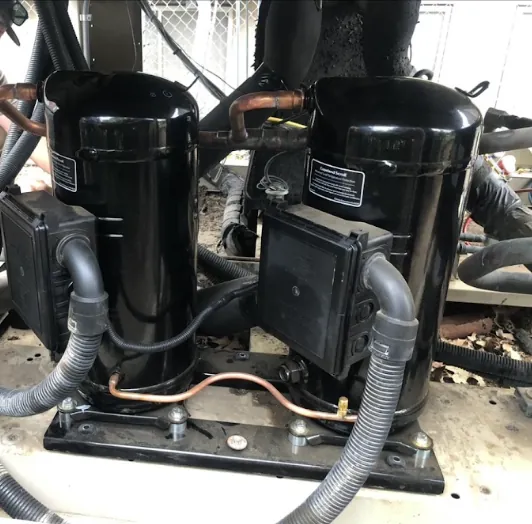
The buildings we work in are full of equipment that has outlived its manufacturer's parts catalog. A facility manager does not want to hear that a 20-year-old air handler is scrap because one board is discontinued. Finding a part, a cross-reference or an adapted replacement for equipment "they don't make anymore" is a big part of why George Blevens put resourceful on the short list of words that describe us.
We repair older equipment until the repairs are no longer economical. When a unit reaches that point, we say so plainly, put it in writing, and help you plan the replacement or retrofit on your schedule instead of an emergency one.
Equipment we repair
- Rooftop and package units from 2 to 120 tons, gas heat and heat pump
- Chillers for comfort cooling and process water, up to 200 tons
- Low-pressure boilers, circulator pumps and hydronic loops
- Cooling towers and condenser water pumps
- Computer room and telecom cooling
- Air handling units, makeup air units and exhaust fans
- Controls, control cabinets and the wiring between them
After the repair
You get a written record of what we found, what we replaced and what we would keep an eye on. If a building has several problems at once, we rank them by risk so the one that can take other equipment down gets fixed first. Parts we install carry a 1-year installation warranty on top of any manufacturer warranty.
Down after hours? Call the office number and choose the emergency option to reach our 24/7 emergency service nights, weekends and holidays.
Repair questions we hear most
Look at three things: the age of the unit against its expected service life, how often it has needed repairs lately, and whether the failed part is still available. A 17-year-old rooftop unit with a bad fan motor is usually worth fixing. The same unit with a failed compressor and a leaking coil usually is not. We give you both numbers so you can decide.
It is a homeowner shortcut: multiply the unit's age by the repair cost, and if the answer is over $5,000, consider replacing. It does not scale to commercial equipment, where a single repair can run several thousand dollars on a unit with many good years left. We compare the repair against the unit's condition and remaining life instead.
Yes. Intermittent trips, alarms that clear themselves and units that "run fine when the tech is here" are the calls we like. We log what the equipment does over time and read the controls and the mechanical side together.
Yes. Every repair write-up notes the condition of the unit, and we can walk the whole building and give you a list of which equipment is likely to need replacing first. That turns next year's surprise into a line in next year's budget.
Related to this repair
Tell us which unit and what it is doing
Make, model and tonnage help if you have them. A photo of the nameplate helps more.
- Phone, 24/7 for emergencies(615) 814-6338
- EmailService@britemech.com